
Those of us working for social justice know the dangers of blindly accepting what the dominant system treats as “natural” or “inevitable.”
The danger is especially important to avoid when it comes to power, given that patterns in power are what distinguish systems of domination from systems of liberation.
But, if not Power Over, then what kind of power do we want instead? How exactly would it be different? What would it look like to wield?
If we can’t answer these questions, there is little hope for truly liberatory change.
For a long time, I couldn’t answer them myself. Then, I found Pieter de Beer’s theory, Coordination: The Fabric of Power—offering an alternative view of what power is, how it flows, and how it can be changed—and it all clicked.
Now, Pieter and I have co-authored a piece in Nonprofit Quarterly that contextualizes his theory within the current political and social movement conjuncture in the United States. In “The Fabric of Power: Repatterning Coordination to Weave the World We Deserve,” we summarize Pieter’s theory and argue that building the world we deserve and today’s task of eliminating fascism are, in fact, one and the same task.
Below, I weave together excerpts from the article with additional commentary to summarize the core argument. Please do check out the full piece here, as well.
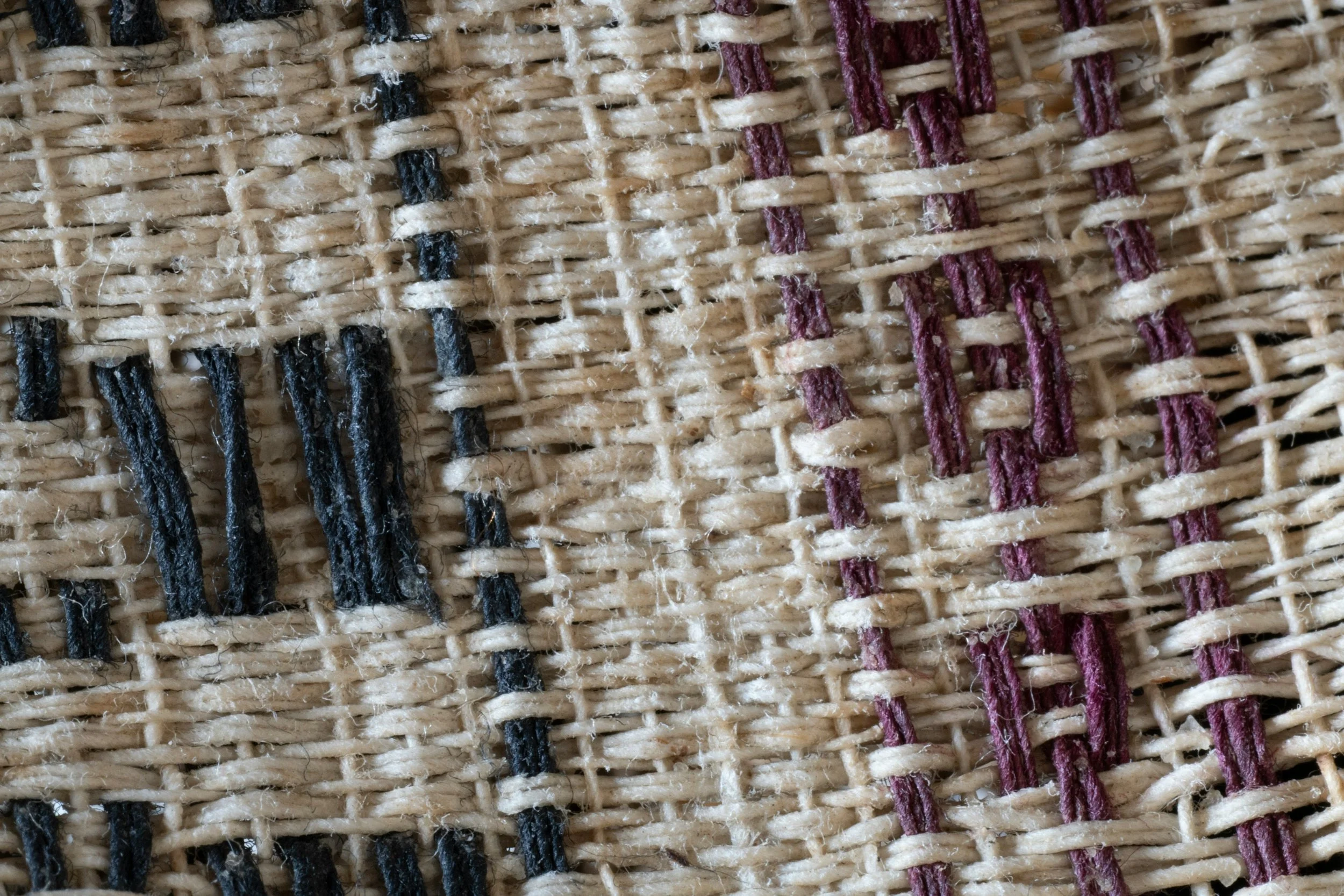
Photo by Hans-Peter Traunig on Unsplash
What Kind of Power Are We Building?
Sociologist Patricia Hill Collins reminds us that our framing of power represents a fundamental philosophical and political choice. “Black women have not conceptualized our quest for empowerment as one of replacing elite white male authorities with ourselves as benevolent Black female ones,” she wrote in her book Black Feminist Thought. “Instead, African American women have overtly rejected theories of power based on domination…to embrace an alternative vision of power…a humanist vision of self-actualization, self-definition, and self-determination.”
In other words, it matters whether we operate from a considered and explicit choice about how we understand power, or implicitly adopt the theory by which the current system is already operating.
Today, that implicit theory is rooted in Power Over, even within progressive movement traditions.
Consider Saul Alinsky’s influential thinking from the 1960s and 70s, which treats power much like a resource: finite and scarce, won or lost through an endless contest between the “haves” and “have-nots.” Many contemporary organizers and strategists still operate as if power belongs only to those who control government institutions. Similarly, respected organizer Marshall Ganz mainly sees power as leverage: If you need my resources more than I need yours, I have power over you.
These theories remain relevant and useful in appropriate contexts. Yet a liberated future cannot be built on power that is binary (we are either “in power” or “out of power”), zero-sum (for me to have more power, you must have less), and based on maintaining leverage over others.
As much as I respect Marshall Ganz’ deep organizing wisdom, I don’t want to live in a world governed by his theory of power. I don’t want to be constantly calculating and maneuvering to build leverage over others. I don’t want game theory to govern all my relationships and interactions.
In Braiding Sweetgrass, Robin Wall Kimmerer beautifully describes how indigenous lifeways show us an alternative: an ethos of reciprocity and care among humans and with the natural world. That’s the world I want to live in.
And as adrienne maree brown,Andrea Ritchie, and Ruha Benjaminteach, we are building the future even now, through the patterns we reinforce in our everyday practice. We determine the power of tomorrow through the theories we choose to center today.
That means we need a practical alternative to practices rooted in dominance and control. Pieter’s theory lays the groundwork for such a practice.
The Fabric of Power
Power is not, as the dominant views suggest, a possession, a station, or a chain of command.
Power is more like a fabric. It is produced by threads of coordination among people, institutions, ideas, and ecosystems. For example, narrative carries power when it generates shared meaning that coordinates our perception, identity, and willingness to act. Organizational designcarries power when it coordinates how we frame problems and who can be involved in solving them. Fear carries power when it coordinates internal compliance without the need for overt coercion. Solidarity carries power when it coordinates a mutual response to an otherwise localized threat.
…
How its threads are patterned—who can initiate them, how they flow, how they adapt to feedback—determines the kind of power that emerges.
Some fabrics are woven to restrain. They are tight and rigid, reinforced by fear and scarcity, designed to bind bodies and possibilities. Their patterns propagate power for only a privileged few. Other fabrics are woven to hold, enable, and heal. They connect, they distribute weight, and they breathe. Their patterns conduct the flow of collective power.
I really love how beautifully poetic Pieter’s writing is.
But he’s also doing rigorous theoretical work. His metaphor of coordination fabric proposes an ontology of power—a theory about its fundamental nature.
Ontological clarity is critical for any discussion of power in service of liberation. If we hope to build up a true alternative to the dominant view of power, we first need to strip our concepts and frameworks back down to this fundamental level.
Five Forms of Power
A coordination-based ontology of power helps us see that power can take many forms: not only Power Over, but also Power Within, Power To, Power With, and Power Through. This is the phenomenology of power, or how it shows up in the world.
Our success in eliminating fascism and building the world we deserve depends on our ability to reject Power Over and allow the rest to flow freely.
Power Over
Power Over is perhaps the most immediately recognizable form of power. It evokes images of domination, coercion, and hierarchy: the boss barking orders, police in riot gear, aircraft carriers. To have “power over” someone is to control them, to bend their will to serve your ends, to subordinate their agency to your own. It is inherently extractive, inherently oppressive. And it is a pillar in the foundation of fascism.
…
But Power Over is not only produced in overt acts of violence and force. It is also a structural dynamic, an enclosure by an entitled minority of the capacity to coordinate: the freedom to initiate and connect a thread, and to influence the pattern of the weave.
…
Today, we seem to tolerate the patterns of Power Over as unfortunate but practical necessities of coordination in human systems.
But we don’t need Power Over to get things done. We can choose to coordinate through different patterns.
Power Within
Power Within is the internal coherence—among body, history, feeling, mind—that gives a person self-determined clarity of volition. It is the ability to pattern oneself with integrity and produce intent without inner war. It is the power that allows a person, even amid fear, pain, and uncertainty, to act from a place of clarity and courage.
…
Power Within is not about suppressing our fears or sacrificing ourselves for the cause. It’s not about domination of the mind over emotion. Rather, it’s about finding harmony among our emotional, cognitive, somatic, and other internal systems. It is about defining for ourselves the worldview and narratives through which we make meaning of our experience.
…
When the self is allowed to reclaim its full interior space, it becomes a node of coherence in systems dominated by Power Over. Power Within changes not only how we act but what kinds of coordination we can imagine, trust, and sustain. As Audre Lorde insisted, our self-knowledge and internal coherence is not a luxury. It is the soil of liberatory futures that makes every other form of power possible.
Power To
Power To is material coordinative capacity: the ability to initiate, connect, and activate threads in the collective fabric. It involves internal coordination among cognitive, emotional, and biophysical resources, as well as coordination between the self and the system. It arises when internal will aligns with what the system allows, and it operates at multiple scales, from the individual to the collective.
…
Minnesota’s day of action reveals what it means to build the kind of Power To that can successfully resist fascist control: namely, power that flows up from the will of individuals and through collective action—not the other way around, where power flows outward from a centralized will, enacting coordination through directives to masses of protesters, donors, or voters. Minnesota shows us that effectively countering fascism will require not broadcast and command, but invitation and inclusion; not only intent, but also the equitable ability to act.
That’s why it matters how we coordinate action. And that comes down to Power With.
Power With
Power With is what allows individual power to flow into collective action at scale.
From a coordination perspective, Power With is not simply a matter of having large numbers or even acting together. It refers instead to a quality of relationship: one that allows people to move together even in difference and stay together even through tension. It exists when people with divergent perspectives, needs, and identities find belonging that doesn’t require the erasure or assimilation of others. It grows when groups are able to metabolize dissent, friction, and contradiction without collapsing into dominance.
We wield our full collective power when these patterns are present. When they are absent, the will of a subset of people dominates that of the rest.
…
Especially in this struggle against fascism, Power With as a relational quality is not optional. When viewed through the lens of coordination, it’s clear that this kind of relationality is the precondition for any alternative to domination. As an amplifier of individual and collective power, it is also a prerequisite to systems change.
Power Through
Power Through is the momentum that flows within systems, coordinating behavior through self-replicating patterns rather than centralized commands. It is constructed in the sedimented layers of habit, neural pathways, cultural myth, institutional protocols, and interlocking systems of oppression. The patterns operate as if on their own. Once set into motion, they shape behavior in the system, often without explicit consent.
Power Through is why systems change is so hard. You can’t engineer change when every problem is a symptom of yet another problem, and no one is really in control. It’s also why conventional strategies—based on methodologies and tools that assume linear causality and mechanical dynamics—are mismatched to the task of displacing fascism.
We can’t plan and execute our way to systems change. But we can strategically cultivate the conditions within which it can arise.
A system’s inertia can be changed slowly, through the cumulative influence of small, repeated actions—the emergence that adrienne maree brown describes. It can also change suddenly and dramatically, when mature relational infrastructure exists and latent tension builds to a threshold, eventually releasing in an emergent cascade of new coordination patterns. These new patterns can enable novel capabilities in a system, as Minnesotans have demonstrated.
In the full article, we illustrate each of the five forms of power using Minnesotan’s resistance to ICE occupation as an example.
In studying that resistance effort through the lens of coordination, I was most struck by how good it felt to be reminded that genuine systems change is possible. When horror after horror seems to suggest that capitalism, patriarchy, and white supremacy are all but invincible, Minnesota gives me hope.
As writer and social worker Cecelia Caspram described, Minnesota has been making a whole new world [emphasis added],” and “an individualistic, hateful, fearful reality is falling away.” “Capitalism dissolved for a period of time,” according to one Minneapolis resident speaking on an NPQwebinar.
Now, Minnesotans don’t want to return to the way things were. As one resident told NBC News, “Trying to go back to a phony-baloney corporate job of filing trademarks and talking about profit shares versus incentives…is just so ultimately meaningless.”
The gravity of the system has shifted.
Minnesotans have shown us the truth of our present struggle: When systems change is the goal, repatterning power is the strategy.
The power to do so resides within and among us. The question is, will we have the courage to follow Minnesota’s lead and let the patterns of domination fall away?
Are We Ready to Do What It Takes to Dismantle Fascism?
We are now three decades into the world’s third wave of autocratization. Six billion humans, 74% of the world’s population, now live in autocracies. It’s like we have regressed fifty years, with global levels of democracy at lows not seen since 1978.
Here in the United States, some people are operating as if the present situation is simply an extreme version of political polarization. Others see it differently.
In strategy, as in medicine, how we diagnose the problem shapes how we respond.
Here’s what I think:
Angela Y. Davis, Langston Hughes, and others made the crucial diagnosis decades ago: Fascism has been living with us in the white supremacy and racial capitalism that have patterned our society since before the country’s founding. Until recently, its effects were felt mostly by people living at the intersections of oppression. Today’s regime represents a metastasis, a more enveloping and gruesome manifestation of our late-stage disease.
We can remove autocratic leaders from positions of institutional authority—and indeed we must—but that alone will not cure the ailment. There is no such thing as a “political fascectomy.” Eliminating fascism requires a repatterning in the very fabric of society.
How much domination and extraction will we tolerate to get this job done? Whatever it takes? Just a little?
If we are serious about dismantling fascism—not just voting out its figureheads or removing its effects only for the most privileged among us—then we must strive for the answer to be “none at all.”
We will one day find ourselves having regained control of democratic institutions and facing the task of reconstructing our country. When that time comes, will we rebuild via well-worn coordination pathways—the ones through which the power of wealthy, white men flows so smoothly? Or will we have repatterned coordination, so every one of us has the material ability to shape what comes next?
The answer will determine not only whether we succeed in removing autocrats from power, but also whether we build a world without domination—or simply swap which cadre of elites gets to dominate.
For more, read the full piece at Nonprofit Quarterly:
“The Fabric of Power: Repatterning Coordination to Weave the World We Deserve”
